Recycling and Sustainability — House Clearance Charlton
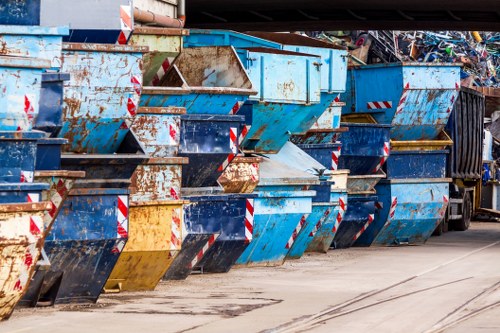 House Clearance Charlton is committed to an eco-first approach to every clearance we undertake in the Charlton area. Our policy centres on minimising landfill, maximising reuse and recycling, and operating a low-emission service that respects local neighbourhoods. Whether you search for Charlton house clearance or a full property clear-out, we focus on creating a sustainable rubbish area at every site and ensuring that materials flow into appropriate recovery routes rather than waste streams. This page explains our targets, partnerships, transfer station use, and the practical steps we take to make house clearances genuinely green.
We have set an ambitious recycling percentage target for our operations: a baseline corporate goal of 75% diversion from landfill for all non-hazardous household clearances within the Charlton area. That target includes materials reused on-site or donated, items repaired and sold, and those sent to authorised recycling processors. The target is reviewed annually, with operational improvements and reporting so we can demonstrate progress toward a higher circularity rate. Our internal audits track tonnes diverted and provide transparency about how close we are to meeting the target.
Partnerships and Reuse Networks
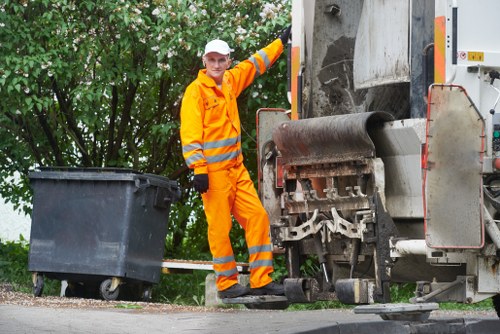
We work closely with local charities, social enterprises and reuse centres to ensure that furniture, textiles, bric-a-brac and usable household items get a second life. Partnerships include charity shops, furniture redistribution schemes and accredited electronic waste (WEEE) collectors. Key activities include:- Donation routing — reusable furniture and household goods are offered to partner charities before being sent for recycling.
- Repair and resale — working with local repair cafés and refurbishers to fix items that would otherwise be discarded.
- Targeted reuse — mattresses, bikes and working appliances are channelled to specialist reuse schemes.
Our collaboration extends to licensed community hubs and local transfer stations that aggregate, sort and dispatch materials to the correct processors. We regularly use borough transfer facilities and authorised waste transfer stations across the south-east London corridor, enabling fast transport of segregated loads and reducing double-handling. These transfer points are selected for their environmental credentials, licensing, and ability to receive mixed recyclables, construction-type waste, and specialist streams such as inert materials and regulated WEEE.
Working with the Boroughs: Waste Separation and Local Practices
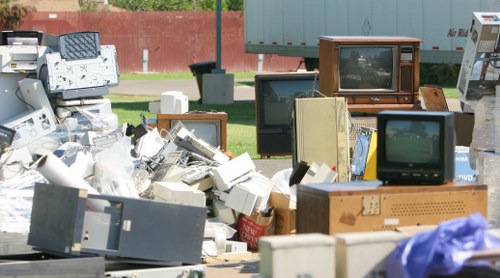
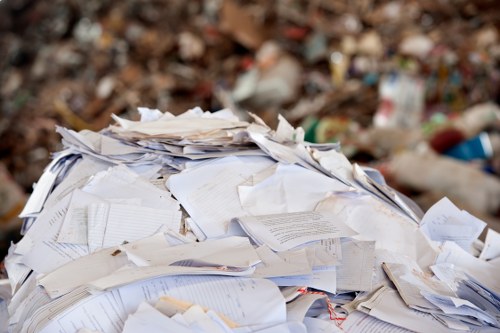
Our teams operate in line with the borough approaches to waste separation, reflecting practical streams used locally: separate containers for paper and card, glass, mixed plastics, metals, food waste and garden/green waste where applicable. We also make a point of pre-sorting at pickup to mirror the Royal Borough and neighbouring councils' systems, ensuring recyclable material does not become contaminated. By mirroring local sorting conventions (for example segregating textiles and small electricals for specialist collection) we make it easier for municipal processors and recycling partners to accept material from our clearances.Hazardous or specialist items such as paint, asbestos-containing materials (where encountered in older properties), fluorescent tubes and certain chemicals are managed through authorised hazardous waste carriers. We maintain certificates of transfer for these streams and direct them to licensed treatment facilities to ensure legal and environmentally safe disposal.
 Low‑Carbon Transport and Logistics — reducing the footprint of collection transport is central to our sustainable rubbish area strategy. Our fleet includes low-carbon vans (hybrid and electric vehicles where operationally feasible) and we use route optimisation software to minimise mileage, fuel use and emissions. For short-distance work in denser parts of Charlton we sometimes deploy cargo bikes and hand-pull trolleys for last-mile collection, cutting emissions and easing parking pressures. All vehicles undergo regular maintenance to preserve fuel efficiency, and we prioritise low-emission hires where our own fleet capacity is exceeded.
We also operate a materials-first workflow on site: segregation at source to create cleaner recyclate streams, rapid identification of reusable items for charity partners, and separation of mixed loads into designated containers at transfer stations. This reduces contamination and increases the percentage of material accepted by reprocessors — a crucial factor in achieving our recycling percentage target.
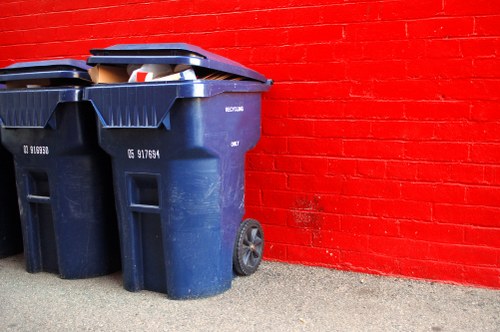
Sustainable Rubbish Area Management and Reporting
A sustainable rubbish area is not an afterthought: it is actively managed throughout a clearance. We use labelled bays and temporary containment to keep materials tidy and sorted, apply dust and stormwater controls where necessary, and produce a site waste summary for larger clearances. Our reports document quantities reused, recycled and responsibly disposed of, creating an auditable trail for commercial clients and a visible commitment to environmental stewardship for domestic clearances in Charlton and surrounding boroughs.Measuring Impact and Continuous Improvement
We publish periodic summaries of diverted tonnages against our 75% recycling goal, and refine processes based on results. Continuous improvement initiatives include staff training on identifying reusable goods, expanding charity networks, piloting zero‑landfill projects for specific job types, and increasing the share of electric vehicles in our fleet. Strong data collection and relationships with transfer stations and reprocessors help us set realistic annual improvements.Our work in Charlton contributes to the broader local circular economy: less waste to landfill, more material recovery, and stronger support for community partners that receive donated goods. We encourage sustainable clearance choices — from bespoke reuse routing to full segregation of recyclable components — while ensuring hazardous materials are handled legally and safely through authorised carriers.
House clearance in Charlton can be done responsibly. By choosing a service that prioritises recycling targets, partners with local charities, uses licensed transfer stations, and deploys low-carbon vans, you support a cleaner, greener Charlton and a more sustainable approach to household waste. Our programme is focused on measurable outcomes, transparency and steady gains toward a circular local economy.